
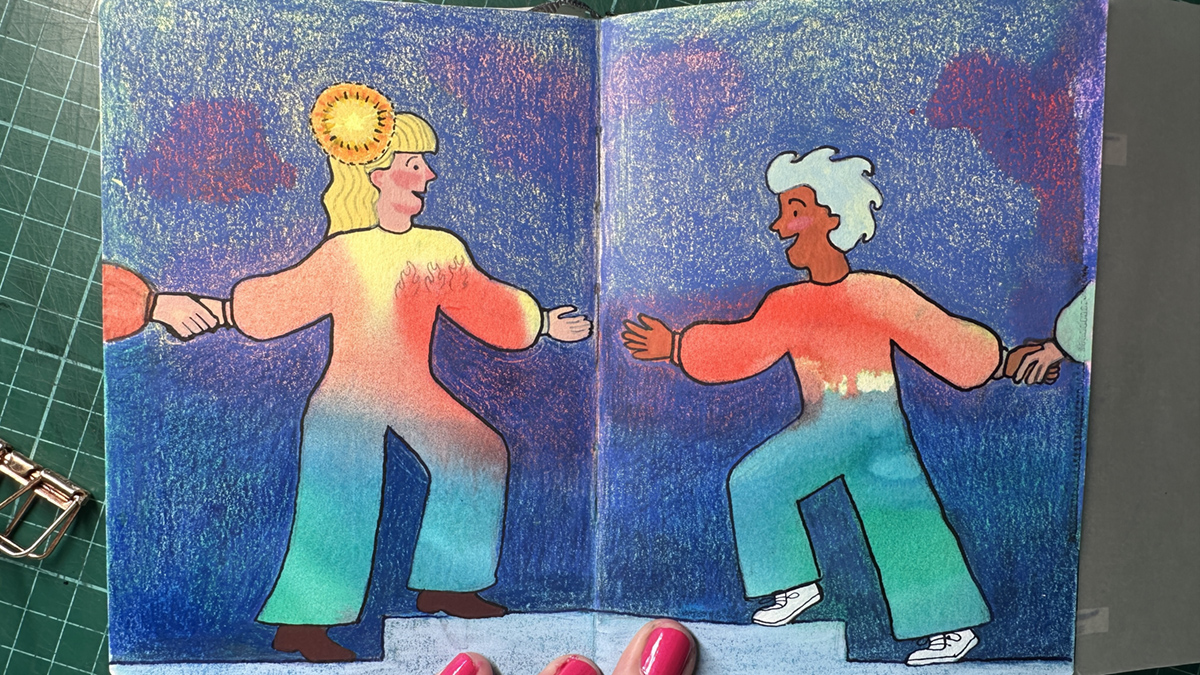
As we reveal this year’s Community Expo artwork, we thought we’d also share the story behind it. We sat down with local illustrator and designer Sascha to chat about her creative process, her love of sketching everything by hand, and what goes into creating illustrations that tell a story.
Can you walk us through your process from a blank page to the finished artwork?
Most projects start with a brief. I’ll read through it, jot down my first thoughts, and then I usually like to meet with the client. It’s important to understand what they’re hoping to achieve, who the audience is, and what they want people to feel.
From there I research the topic while making notes and little sketches. I’ll often look at different illustration styles to see what feels appropriate for the project.
Once I’ve got some ideas, I’ll sketch layouts and work out where the text needs to sit before gathering more reference material. If it’s a nature-based project, I’ll head outside with my camera, go for walks and collect photographs that I can work from.
I refine the drawings digitally, print them onto watercolour paper, test different colour palettes, and then paint the final artwork. Throughout the whole process I check in with the client to make sure we’re heading in the right direction. I’d much rather share ideas as they develop than spend weeks on a finished piece that misses the brief.
You work almost entirely by hand. What does sketching allow you to discover that a computer doesn’t?
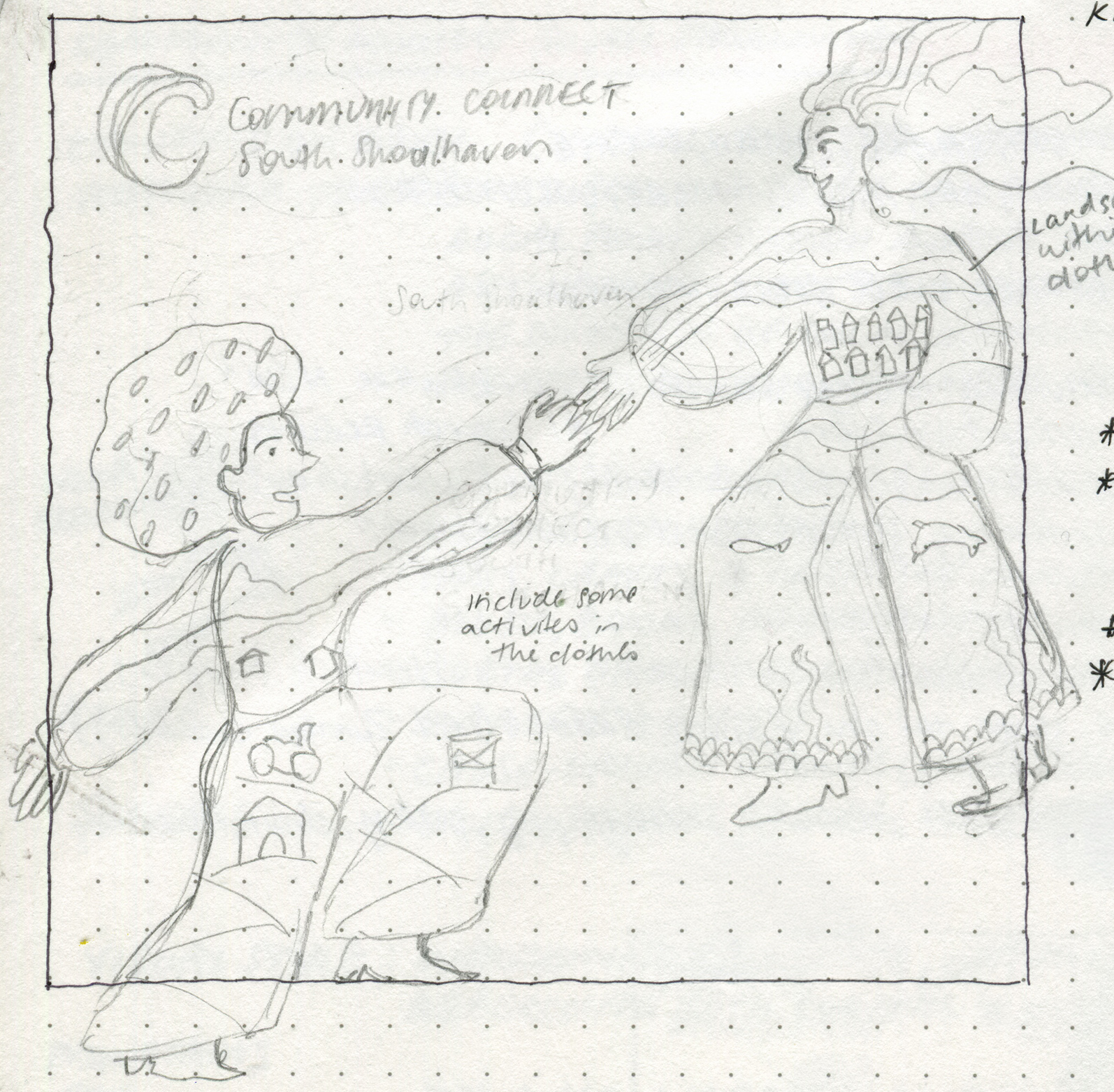
I’ve always sketched first.
At university we weren’t allowed to touch a computer for the first year. We learnt typography, drawing and photography manually before we ever opened design software, and that approach has stayed with me.
Sketching helps me get the ideas out of my head. Little thumbnail drawings let me see the composition in its simplest form before I move to the computer. If I start digitally, I can spend hours moving things around without really solving the problem.
I also take lots of notes when I’m talking to clients because it helps me remember what mattered most in the brief and keeps me on track.
The computer is just another tool in the process. It helps me refine the work, but it isn’t doing the thinking.
You’ve created artwork for our Community Expo, Yumaro’s Sow Good Festival and the Milton Folk, Blues & Jazz Festival. They all have such different personalities. How do you capture the feel of each event?
Earlier in my career I worked in music publishing and entertainment marketing, where every project had a completely different style depending on the artist or festival. Learning to adapt became part of the job.
Research is a huge part of the process. I spend time understanding the client, the audience and the place.
For Sow Good Festival I spent a lot of time photographing native plants, birds and local landscapes before painting individual elements that I later brought together digitally.
The Folk Festival was very Milton-focused, so the landscape naturally became part of the story.
Being out in those places helps me understand what they feel like. Hopefully that feeling comes through in the finished artwork.
Where do you find inspiration?
I’m not always looking for one specific thing. It’s more that I notice things.
I think artists tend to see details that other people walk past. Tiny plants, patterns in rocks, textures in shells, birds, colours, little moments in nature.
I love walking with my camera. If I’m feeling stuck, going for a walk almost always helps. Sometimes the best ideas come when you’re not forcing them.
How do you know when an illustration is heading in the right direction?
Usually it takes a lot of sketches before something clicks.
Sometimes I’ll create something quite elaborate before realising the strongest idea is actually one small detail within it. Then I’ll strip everything back and rebuild from that simpler idea.
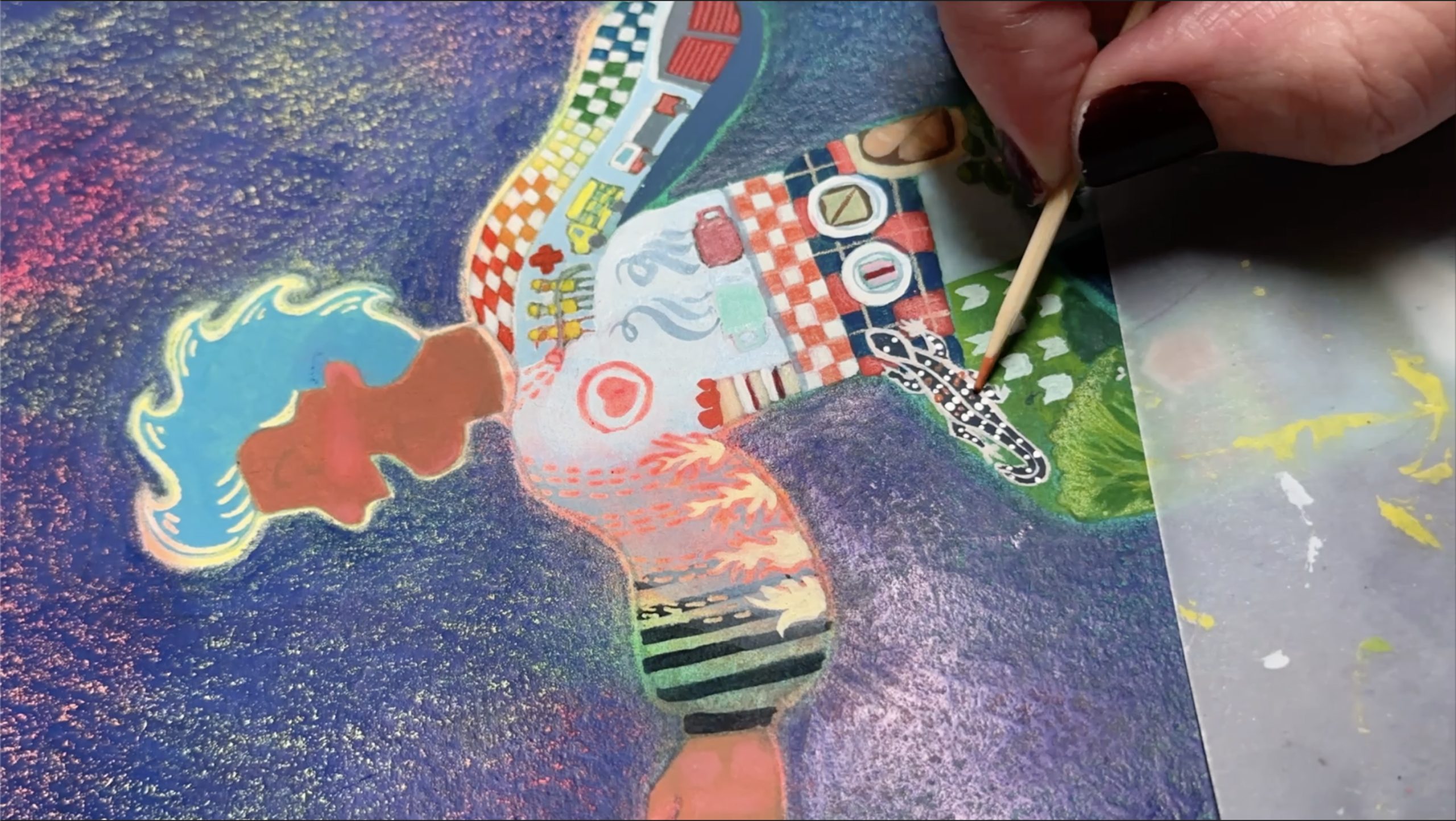
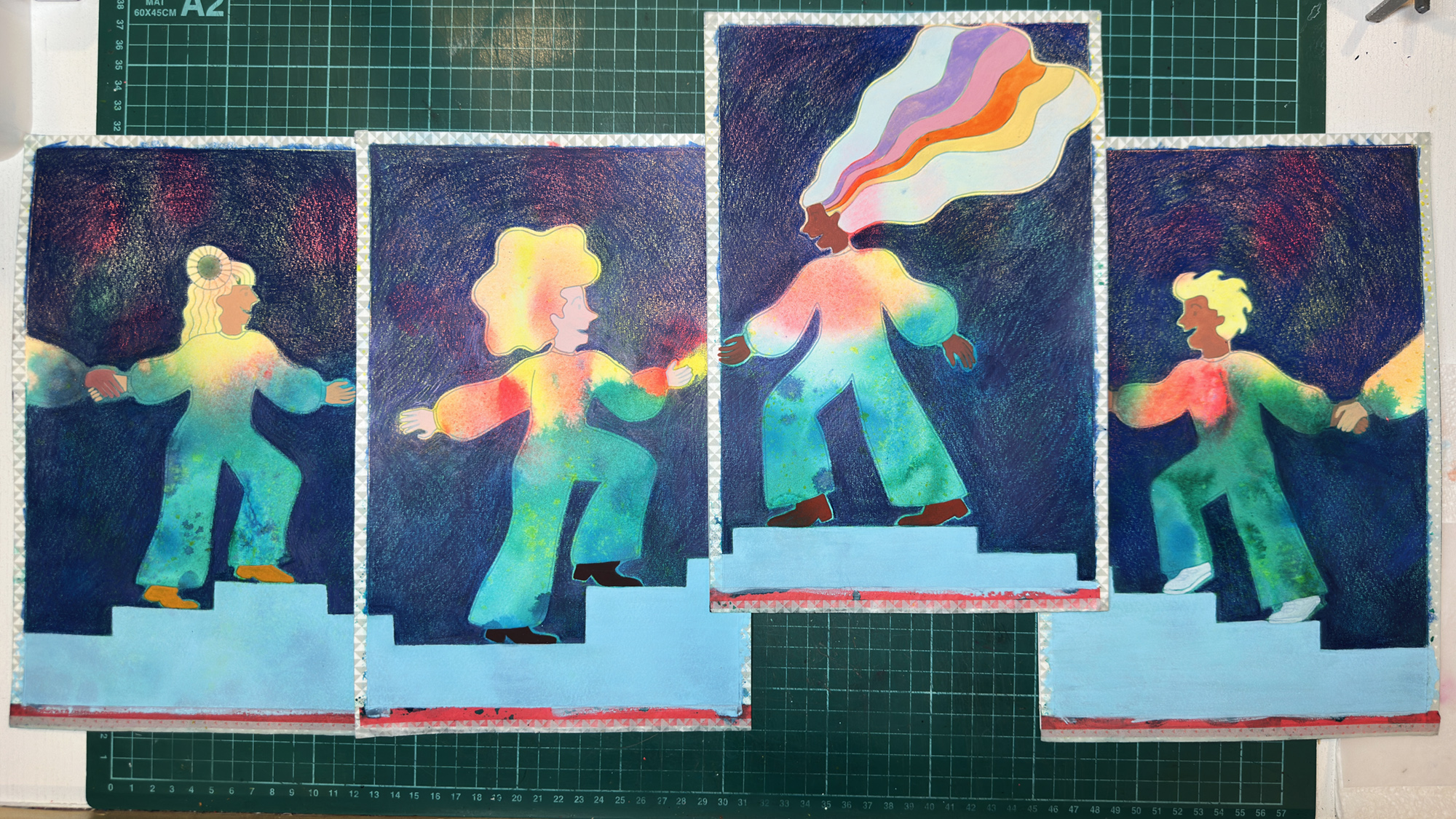
That happened with the Community Expo artwork. I kept returning to the idea of people carrying different activities on their clothing, but it wasn’t quite working until I simplified it into two people connecting rather than a whole crowd of figures.
I always find that when I take an idea back to its simplest form, the message becomes much clearer.
Deadlines help too. Otherwise I’d happily keep tinkering forever.
Community Expo is all about helping people discover what’s happening in our community. How did that shape your approach to the artwork?
The first thing I did was explore the Community Connect website and look through all the different community groups to understand what opportunities already existed.
From there I thought about what connects us as people. You wanted the artwork to feel inclusive of all ages, abilities and backgrounds, so I started thinking about the things we all share—our need for connection, community and belonging.
A lot of the inspiration I found online felt quite clichéd – hands reaching towards each other, for example – but those images have become clichés because they communicate something instantly.
The little details became really important. Almost every activity in the illustration has at least two people doing it together because the whole idea was about finding your people and connecting through shared interests.
Even the fisherman isn’t really alone – he’s connecting with the fish.
Everything in the artwork comes back to connection.
—
Sascha Parbery
https://www.saschaparbery.com/
https://www.facebook.com/SaschaParberyDesignIllustration
https://www.instagram.com/sascha_illustrated